Health Equity for Marginalised Communities: Access to quality healthcare should...
Read More

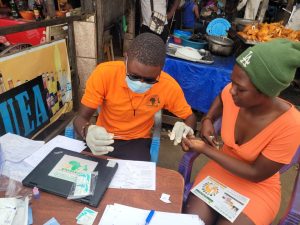
Health Equity for Marginalised Communities: Access to quality healthcare should...
Read MoreThe social enterprise model is one of the most sustainable models of providing healthcare services in low-resource settings, especially for marginalized groups and communities. Covid and the global financial crisis have forced many donors, Governments, and civil society to rethink future health financing models and the social enterprise approach is being seen as the best pathway to the sustainable and effective delivery of HIV/Sexual and reproductive health services in Sub-Saharan Africa
Why social enterprise: The dominant approach used to promote HIV prevention and treatment relies on one-off donor-funded programmes, centralized public clinic service delivery, unisectoral implementation, and vertically organized support (national/state/local public health structures). These systems have failed to test, link, and retain a large portion of most at-risk populations. Traditional project funding has failed to provide sustainable security and continuity of investment to significantly reduce HIV as well as stigma and discrimination.
Social entrepreneurship provides a new approach to providing long-term sustainable solutions to HIV through identifying new prevention, treatment, and retention strategies. Optimizing health systems and social enterprise interventions greatly benefits the high-risk population, ensures value for money, and promotes person-centred, community-oriented, and tailored HIV service delivery. In the context of HIV prevention and treatment, social entrepreneurship focuses on developing novel, sustainable, community-responsive health services and marginalised population healthcare needs through innovation, Healthy Markets contributed to (1) improved sustainability and country/community ownership of the HIV response.

Although Social enterprise models have yet to be widely implemented, they show great promise. Furthermore, while declining public health budgets in many countries suggest the need for alternate resources, social entrepreneurship approaches are useful at any point in an economic cycle. The relationship of social entrepreneurship both to the global economic downturn and to revenue generation should not be underestimated. Social entrepreneurship is not primarily focused on revenue generation but rather is primarily about innovation and social change. The social entrepreneurship for HIV and sexual health prevention (SEHIV) approach focuses on decentralized community delivery, multisectoral networks, and horizontal collaboration (business, technology, and academia). This will generate long-term health finance and empower communities and reduce reliance on donor funding.
Despite being considered a game changer in the fight against HIV/STD etc, social entrepreneurship has yet to be widely used in promoting sexual health and HIV in Africa. Several social entrepreneurial tools, such as social marketing, conditional cash transfers, and microenterprise, can optimize the delivery of comprehensive sexual health interventions and have been seen as effective in sexual health promotion and HIV prevention in Africa.